
Your Licensed Electrician in Gulfport, MS
Your electrical system protects your home and keeps your family safe. When something fails, or when you need an upgrade, you need certified electricians who understand Gulf Coast homes. Mr. Electric® of Gulfport is a locally owned franchise serving Gulfport, Long Beach, Pass Christian, Biloxi, and Harrison County. From electrical repair to panel upgrades and generator installations, our Neighborly Done Right Promise® covers every job.

Book Online
A representative from our office will get back to you shortly to schedule service.
Due to a system error, we did not get your request. Please call us for immediate assistance.
We don't currently provide service to this ZIP/Postal code.
Yes! You can email me service reminders and other messages.
Mr. Electric, a Neighbourly Company on its own behalf and on behalf of and its affiliates and franchisees requests your consent to send promotional and other electronic messages to you concerning products and services they believe are of interest to you. By checking this box, you agree to receive these messages. You can unsubscribe at any time.
Text opt-in does not apply for Canadian residents.
Customer Reviews
View All Testimonials
The Neighborly Done Right Promise® delivered by Mr. Electric®, a proud Neighborly company.
Easy Online BookingResidential Electrical Services Built for Gulf Coast Homes
Gulfport homes face conditions that stress electrical systems year-round. Salt air corrodes connections. Coastal humidity degrades electrical wiring. Hurricane season demands reliable backup power and surge protection. Our certified electricians handle panel upgrades, generator installations, surge protection, EV charger installation, lighting solutions, and electrical troubleshooting across Harrison County. We serve Gulfport, Pass Christian, Long Beach, Biloxi, and the surrounding areas. Choose us for upfront pricing from licensed professionals and the assurance of the Neighborly Done Right Promise®. Contact us today to schedule your electrical service.
-
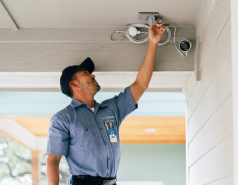
Installations
Learn more InstallationsWhether you need a small repair or a large-scale re-wiring, Mr. Electric handles all installations.
-

Lighting
Learn more LightingNew lighting enhances your property's safety and appeal. We provide custom lighting indoors and out.
-
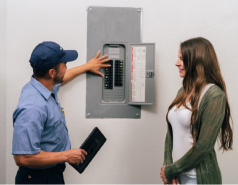
Electrical Safety
Learn more Electrical SafetyEntrust electrical repair to the pros. Safety is our top priority, protecting you and your property.
-
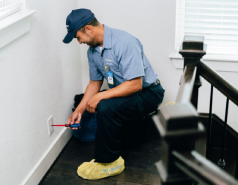
Repairs
Learn more RepairsMr. Electric handles all electrical repairs near you. Count on us to do the job right the first time.
Let us know how we can help you today.
Why Gulfport Residents Choose Mr. Electric
-
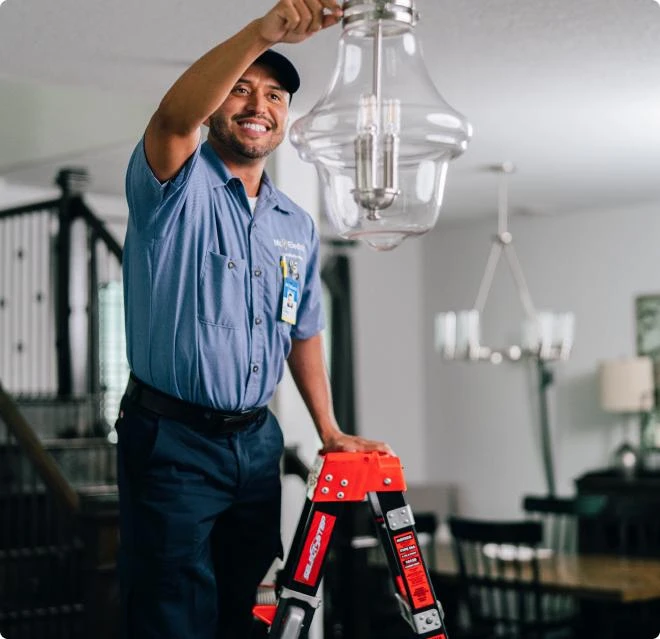
Every electrician on our team holds a license from the Mississippi State Board of Contractors, carries full bonding and insurance, and passes a thorough background check. We train to current National Electrical Code standards and local requirements enforced by the City of Gulfport Inspection Services Department. Mr. Electric is part of the Neighborly network, a recognized Entrepreneur Franchise 500 brand with more than 5,500 franchises across 30 brands. You get local accountability with national standards behind every job.
-
We price by the job, not by the hour. You receive a clear quote before we begin any electrical work. No hidden fees. No surprise charges for trip time, diagnostic work, or materials. You approve the total cost before we touch a single wire. If we find an issue mid-job that changes the scope, we stop, show you what we found, and provide a revised quote before we continue.
-
Every electrical installation, electrical repair, and electrical panel upgrade we complete carries the Done Right Promise®. If the work is not done right, we make it right. You get local service with the strength of a national workmanship guarantee behind it. Whether you need minor repairs or help with a complex installation, our Gulfport electricians will take care of it. Contact us today to get started.
14231 Seaway Road Suite F5 Gulfport, MS 39503, United States
Areas We Serve
Frequently Asked Questions About Electrical Services in Gulfport
-
Mr. Electric of Gulfport provides residential and commercial electrical services throughout Harrison County. Our certified electricians handle the following:
- Electrical panel upgrades, replacements, and repairs
- EV charger installation and dedicated circuit wiring
- Generator installations and transfer switch wiring
- Whole-home surge protection
- Electrical safety inspections
- Lighting solutions for recessed, LED, outdoor, landscape, and specialty lighting
- Electrical troubleshooting and electrical repair
- GFCI and AFCI outlet and breaker installation
- Tamper-resistant outlet installation
- Ceiling fan, exhaust fan, and attic fan installation
- Dedicated circuit installation for electrical appliances and equipment
- Wiring upgrades, including aluminum wiring remediation
- Smart home device wiring and integration
- Spa, pool, and outdoor kitchen electrical connections
- New construction and electrical remodeling
- Commercial electrical services for businesses throughout Harrison County
Every job follows the National Electrical Code and local requirements enforced by the City of Gulfport Inspection Services Department. Contact us to discuss your electrical project.
-
A circuit breaker trips when it detects a problem. The three most common causes are an overloaded circuit, a short circuit, and a ground fault. In Gulf Coast homes, corrosion from salt air and humidity adds a fourth cause: breaker failure from degraded contacts. Reset a tripped breaker once. If it trips again, call us for electrical troubleshooting. Do not keep resetting a breaker that trips repeatedly. Repeated trips signal a problem in the circuit or the breaker itself that needs professional diagnosis and electrical repair.
Common Causes of Tripping Breakers
- Overloaded circuit: You draw more current than the breaker allows to pass. Space heaters, window AC units, and hair dryers on shared circuits are frequent culprits. A 15-amp circuit handles about 1,800 watts continuously. One space heater alone uses 1,500 watts.
- Short circuit: A hot wire and a neutral wire touch, creating a sudden current surge. The breaker trips instantly. This often happens inside a damaged appliance cord or a faulty outlet.
- Ground fault: Current escapes to a grounded surface. A GFCI breaker or outlet detects this imbalance at 4 to 6 milliamps and trips before you feel a shock.
- Corroded breaker: Salt air pits breaker contacts over time. A corroded breaker loses the ability to hold a solid connection. It trips at lower loads than rated or fails to trip when it should.
-
Upgrade your electrical panel when your electrical demand exceeds your panel's safe capacity. Most Gulfport homes built before 1980 have 100-amp electrical panels. Those panels were designed before central air conditioning, electric water heaters, EV chargers, and modern kitchen electrical appliances became standard. A 100-amp panel cannot safely support today's residential electrical load in most cases. Some signs your 100-amp panel needs to be upgraded include:
- Circuit breakers trip frequently, especially when multiple appliances run at once
- Lights dim when your HVAC system or refrigerator compressor starts
- You want to add an EV charger, hot tub, generator, or major electrical appliances
- Your panel has double-tapped breakers (two wires sharing one breaker terminal)
- You are adding a home addition, finishing a basement, or doing a full kitchen remodel
- Your panel is a Federal Pacific or Zinsco brand (documented failure rates, replace regardless of amperage)
What a Load Calculation Tells You
Before recommending an upgrade, we perform a load calculation, as per NEC Article 220. We add up every electrical load in your home: lighting circuits, HVAC, water heater, kitchen electrical appliances, laundry, and any planned additions. NEC requires that your panel handle your total calculated load at no more than 80 percent of its rated capacity. A 100-amp panel supports 80 amps of continuous load. A 200-amp panel supports 160 amps. If your calculated load exceeds 80 amps, the upgrade is necessary, not optional.
What a 200-Amp Panel Upgrade Involves in Gulfport
We pull a permit from the City of Gulfport Inspection Services Department before any work begins. On installation day, we coordinate with Mississippi Power for a planned service interruption. We remove the old panel, install the new 200-amp service entrance equipment, label every circuit, verify grounding and bonding, and restore power. The City of Gulfport Inspection Services Department schedules a final inspection. Most residential panel upgrades take one full day. Power is off for three to five hours during the switchover. Contact us to schedule your panel assessment.
-
Yes, and the need is more urgent here than in many other parts of the country. Orange Grove, East Gulfport, Bayou View, and other established Gulfport neighborhoods have housing stock built primarily in the 1960s through the 1980s. These homes pose specific electrical risks that our team regularly sees. We perform whole-home electrical safety inspections to identify every issue, prioritize what needs immediate electrical repair, and give you a clear plan for what to address next. Learn more about our electrical safety inspections online or give us a call today.
What Our Electricians Find Most Often in Older Gulfport Homes
- 100-amp electrical panels: Undersized for modern demand, and often showing corrosion from decades of coastal humidity exposure.
- Double-tapped breakers: Two wires sharing one breaker terminal is a code violation under NEC 408.41. The loose connection creates heat. Heat damages insulation. This is one of the most common defects we find in older homes in Harrison County.
- Aluminum electrical wiring: Homes built between 1965 and 1973 often have aluminum branch circuit wiring. Aluminum expands and contracts more than copper, loosening connections at outlets, switches, and fixtures over time.
- Federal Pacific and Zinsco electrical panels: These brands have documented breaker failure rates. Their breakers do not always trip during overloads. We recommend replacement regardless of age or apparent condition.
- Missing GFCI and AFCI protection: Homes built before 2008 typically lack tamper-resistant outlets. Homes built before 1999 often lack GFCI protection in required locations. Homes built before 2008 often lack AFCI protection in bedrooms and living areas.
- Corroded neutral bar connections: The neutral bar inside the panel connects every circuit's return path. Salt air and humidity corrode these connections over time, causing voltage fluctuations and flickering lights throughout the home.
-
Salt air and humidity are the two most aggressive factors affecting electrical systems in Gulfport. Homes within 10 miles of the Gulf Coast face a level of corrosion that inland homes rarely experience. Gulfport averages 74 to 76 percent relative humidity year-round, according to NOAA climate data. Salt particles in coastal air conduct electricity and attract moisture, accelerating corrosion on every metal surface inside your electrical systems. We recommend inspecting your main electrical panel and outdoor electrical components every 3 to 5 years if you live within 5 miles of the coast, and every 5 years if you live further inland. Catching corrosion early prevents larger failures and keeps your electrical systems safe.
What Corrosion Does to Your Electrical System
- Breaker contacts: Salt deposits pit breaker contacts. Pitted contacts create resistance. Resistance creates heat. A breaker running hot will eventually fail to hold a connection or fail to trip when it should.
- Wire terminations: Connections at outlets, switches, and panel terminals loosen as corrosion builds up between metal surfaces. Loose terminations are the leading cause of electrical fires in residential wiring.
- Grounding electrode conductors: The copper conductor connecting your panel to the grounding electrode corrodes faster in coastal environments. A failed or high-resistance ground means the fault current has nowhere to go safely. We test ground resistance as part of every panel inspection.
- Outdoor components: Meter bases, service masts, weatherproof covers, and outdoor outlet enclosures corrode within years in coastal conditions. Rust inside a meter base creates arcing. Damaged weatherproof covers allow water infiltration into outlet boxes.
- Panel enclosures: Water infiltration through corroded gaskets leaves rust staining on the panel interior and white powdery salt deposits on breaker terminals. Both are signs of active corrosion damage.
-
A burning plastic smell from your electrical panel is a serious emergency. A burning plastic smell signals overheating. Overheating melts wire insulation and breaker housings. The most common causes are a loose connection at a breaker terminal, an overloaded circuit that runs continuously, or a failing breaker that does not trip when it should. All three require professional electrical repair. Follow these steps immediately:
- Do not open the panel cover. Electrical panels operate at high voltage. Opening the cover without proper equipment and training puts you at serious risk of electrocution and arc flash.
- Locate your main breaker. On most panels, the main breaker is at the top. It controls power to the entire panel.
- Turn off the main breaker if you can do so safely without touching any other part of the panel. If you see smoke, flames, or hear arcing sounds, skip this step.
- Leave your home immediately. Do not stop to gather belongings.
- Call 911 if you see smoke or flames. Electrical fires spread quickly through wall cavities.
- Call Mr. Electric of Gulfport. We respond to electrical emergencies and prioritize situations involving burning smells, smoke, or visible damage to electrical equipment.
- Do not restore power yourself. Our certified electricians diagnose the cause, perform the necessary electrical repair, replace damaged components, and verify safe operation before power is restored.
-
Flickering lights point to one of four problems: a loose connection, an overloaded circuit, a failing component, or a utility supply issue. In Gulf Coast homes, coastal corrosion adds a fifth cause that inland electricians rarely see. Do not ignore persistent flickering. A loose connection generates heat continuously. Over time, that heat damages wire insulation, creating fire hazards inside your walls. We provide electrical troubleshooting to locate the source and perform the electrical repair correctly.
How to Identify the Source of Flickering
- Flickering in one room only: Points to a loose connection at the fixture, switch, or outlet on that circuit. A loose wire creates intermittent contact. The connection heats and cools, causing the flicker.
- Flickering throughout the house when an appliance starts: Your HVAC system, refrigerator compressor, or well pump draws a large startup current. If your electrical panel lacks capacity, this startup load causes a voltage drop that dims lights on other circuits. This is a panel capacity problem, not a lighting problem.
- Flickering throughout the house with no clear trigger: This often signals a loose connection at the main panel, a failing main breaker, or a problem at the service entrance where utility power enters your home. It can also indicate a corroded connection between the neutral bar and ground, which is common in older Gulfport homes.
- Flickering during or after storms: Utility supply fluctuations during storms cause temporary flickering. If flickering persists after the storm, check for water infiltration into your panel or service entrance damage.
-
A dedicated circuit serves only one appliance or electronic device. No other outlets or fixtures share the circuit. This prevents the appliance or device in question from tripping breakers when other devices draw current on the same circuit, and it protects both the appliance and the wiring from overloading. The National Electrical Code requires dedicated circuits for the following in most residential installations:
- Refrigerator (15 or 20 amps)
- Dishwasher (20 amps)
- Garbage disposal (20 amps)
- Microwave (20 amps)
- Electric range or oven (50 amps, 240 volts)
- Clothes washer (20 amps)
- Electric dryer (30 amps, 240 volts)
- Electric water heater (30 amps, 240 volts)
- HVAC system (varies by unit, typically 30 to 60 amps, 240 volts)
- EV charger (40 to 50 amps, 240 volts)
- Hot tub or spa (50 to 60 amps, 240 volts)
- Pool pump (20 to 30 amps)
- Sump pump (15 to 20 amps)
Many older Gulfport homes lack dedicated circuits for modern electrical appliances. A kitchen remodel often reveals that the refrigerator, microwave, and dishwasher all share one circuit. Sharing circuits causes nuisance breaker trips and, over time, overheating at wire connections. We install dedicated circuits as part of panel upgrades, kitchen remodels, and any new electrical appliance installation. Contact us to assess your home's circuit layout.
-
An EV charger installation in Mississippi requires a licensed electrician. A Level 2 charger operates at 240 volts and draws 30 to 50 amps continuously while charging. The installation requires a dedicated circuit, proper wire sizing, a correctly rated breaker, secure grounding, and a permit and inspection from the City of Gulfport Inspection Services Department. All of this falls under NEC Article 625. Additionally, any number of things can go wrong during a DIY installation, including:
- Undersized wire overheats during charging sessions, creating a fire risk inside the wall
- An incorrect breaker rating allows the circuit to carry more current than the wire can handle safely
- Poor grounding creates shock hazards in the vehicle during charging
- An unpermitted installation voids homeowner's insurance coverage for related damage
- The installation fails inspection if you sell your home, requiring costly rework
We handle the full installation: load calculation, permit application, panel assessment, circuit installation, charger mounting, final connections, and inspection scheduling. You get a charger installed correctly and safely, backed by our workmanship promise. Learn more about EV charger installation in Gulfport.
-
Your answer depends on your panel's rated capacity and your home's current electrical load. A Level 2 EV charger draws 30 to 50 amps continuously. Many Gulfport homes built before 2000 have 100-amp service. Adding a 40-amp EV charger circuit to a 100-amp panel that already serves HVAC, water heater, kitchen electrical appliances, and lighting often exceeds the panel's safe capacity.
A 100-amp panel supports a maximum continuous load of 80 amps. A 200-amp panel supports 160 amps. The typical Gulfport home draws 60 to 75 amps for HVAC, appliances, lighting, and water heating. That leaves a 100-amp panel with only 5 to 20 amps of available capacity, which is not enough for a Level 2 EV charger. A 200-amp panel leaves 85 to 100 amps of available capacity, which is sufficient in most cases. Both panel sizes require a permit for EV charger installation from the City of Gulfport Inspection Services Department.
Homes with a 100-amp panel usually require an upgrade before the charger circuit is installed. Homes with 200-amp service usually do not. We verify your panel capacity with a load calculation before recommending an upgrade. If your 100-amp panel has sufficient capacity, we install the EV charger circuit without upgrading the panel. If not, we upgrade the panel first. Most panel upgrades take one day. EV charger installation follows the next day or the same day if scheduling allows.
-
Tamper-resistant outlets (also called tamper-resistant receptacles, or TRRs) have spring-loaded shutters inside that block access to the electrical contacts. The shutters open only when equal pressure is applied to both slots at the same time, as when you insert a plug. A child inserting a key or paperclip into one slot cannot open the shutters. The National Fire Protection Association reports that tamper-resistant receptacles reduce the risk of child electrical injuries by approximately 90 percent.
The National Electrical Code requires tamper-resistant outlets in all 125-volt, 15-amp and 20-amp receptacles in dwelling units per NEC 406.12. This requirement took effect in the 2008 edition of the NEC. Homes built or fully rewired after 2008 have them. Older homes do not. We install tamper-resistant outlets throughout your home, focusing on bedrooms, playrooms, kitchens, and living areas. The outlets look identical to standard outlets from the outside. The protection works automatically. You do not need to remember to replace a cover every time you unplug something.
-
GFCI and AFCI are both safety devices built into breakers or outlets, but they protect against different hazards. GFCI stands for Ground Fault Circuit Interrupter. AFCI stands for Arc-Fault Circuit Interrupter. Knowing the difference helps you understand what your home needs and why. A GFCI device monitors the current flowing out on the hot wire and returning on the neutral wire. When those two values differ by 4 to 6 milliamps, it detects a ground fault, meaning current is escaping through an unintended path, often through a person. The GFCI trips in 1/40th of a second, fast enough to prevent a lethal shock.
The National Electrical Code requires GFCI protection in bathrooms, kitchens, garages, outdoor areas, unfinished basements, crawl spaces, laundry areas, and wet bars per NEC 210.8. Water contact with an outlet or appliance is the most common trigger. Homes built before 1999 often lack GFCI protection in all required locations. To test a GFCI outlet, press the TEST button monthly. The outlet should lose power. Press RESET to restore it.
An AFCI breaker monitors the electrical signature of current flowing through the circuit. Arcing current, the kind created by a damaged cord, a loose connection, or a failing appliance motor, produces a distinctive waveform pattern. The AFCI breaker recognizes that pattern and trips before the arcing generates enough heat to start a fire. The National Electrical Code requires AFCI protection in bedrooms, living rooms, hallways, dining rooms, family rooms, and similar areas per NEC 210.12. Homes built before 2008 often lack AFCI protection.
To test an AFCI breaker, press the TEST button on the breaker face. The breaker trips. Press Reset to restore power. If it trips repeatedly when you plug in a specific appliance, that is called nuisance tripping. We troubleshoot the circuit to determine whether the trip is due to a real arc fault or an incompatibility with an older appliance motor. Many older Gulfport homes lack both types of protection. We install GFCI outlets and AFCI breakers as part of electrical safety inspections, panel upgrades, and remodel projects.
-
Testing a GFCI outlet takes less than one minute and requires no tools. Follow these steps:
- Plug a lamp or phone charger into the GFCI outlet to confirm it has power.
- Press the TEST button on the outlet face. The outlet should immediately lose power. Your lamp goes off, or your charger stops.
- Press the RESET button. Power should be restored. Your lamp comes back on.
- If the outlet does not lose power when you press TEST, the GFCI has failed. The outlet looks functional but provides no protection. Replace it.
- If the outlet loses power but does not reset, the GFCI mechanism has failed in the tripped position. Replace it.
Test every GFCI outlet in your home monthly. Coastal humidity accelerates GFCI mechanism failure in Gulfport homes. A GFCI outlet that fails its test provides no shock protection even though it still passes current. We replace failed GFCI outlets during routine electrical repair visits and safety inspections.
-
Plastic plug covers provide temporary protection but require constant replacement. Every time you unplug something, you need to put the cover back. Children figure out how to remove them. Adults forget to replace them. Tamper-resistant outlets have permanent, automatic protection built into the receptacle itself. The shutters reset every time you remove a plug. There are no covers you need to manage.
The National Fire Protection Association reports that tamper-resistant outlets reduce the risk of child electrical injuries by up to 90 percent compared to standard outlets. Homes built after 2008 have them per code. Older homes do not. We install tamper-resistant outlets throughout your home and add GFCI protection in kitchens, bathrooms, garages, and outdoor areas. We also perform whole-home electrical safety inspections to identify loose connections, outdated electrical wiring, and other hazards in your electrical systems.
-
We install natural gas and propane-fueled standby generators for homes and businesses throughout Harrison County. The Mississippi Gulf Coast experiences two to three tropical storms or hurricanes each year on average, according to NOAA historical data. Power outages following major storms last three to seven days. Mississippi Power reports that restoration after large-scale storm events can take more than two weeks in the most affected areas.
A standby generator keeps your refrigerator running, your air conditioning on, your medical devices powered, and your security system active when the grid goes down. For businesses, generator installations protect inventory, maintain operations, and keep your team safe and operations running during extended power outages. Most residential generator installations take one to two days. A typical generator installation service includes:
- Load calculation to size the generator to your home's electrical demand
- Transfer switch installation to prevent backfeeding Mississippi Power utility lines (required by NEC Article 702 and utility regulations)
- Fuel line connection for natural gas or propane systems
- Permit application to the City of Gulfport Inspection Services Department
- Final inspection scheduling and coordination
- System test and walkthrough before we leave
-
You should schedule your generator installation between February and April. Hurricane season begins June 1. Generator demand peaks in late spring as storm season approaches, and installation schedules fill weeks in advance. Ordering, permitting, and completing generator installations takes two to four weeks, depending on equipment availability and inspection scheduling. If you wait until a named storm enters the Gulf of Mexico, generator inventory disappears from suppliers, and installation crews book out for months. We have seen this pattern every active hurricane season.
Scheduling in late winter gives you time to select the right unit, complete the permit process with the City of Gulfport Inspection Services Department, and test the system before June. We also perform pre-season generator maintenance for existing units: oil changes, filter replacements, load bank testing, spark plug inspection, and transfer switch operation verification. A generator that sits unused for eight to ten months needs a full service check before you depend on it during a multiday power outage.
-
Projects like new electrical wiring, circuit modifications, electrical panel upgrades, service changes, and generator installations all require permits from the City of Gulfport Inspection Services Department. Simple like-for-like replacements, such as swapping a light fixture or replacing an outlet with the same type in the same location, typically do not require permits. Permits may seem to create paperwork and lengthy delays, but these requirements exist because inspections catch installation errors before they cause serious electrical safety hazards. An unpermitted panel upgrade or wiring addition can void your homeowner's insurance coverage for related damage. When you sell your home, unpermitted electrical work often surfaces during buyer inspections and requires costly remediation.
When you hire Mr. Electric, we handle the permit application, schedule the inspection, and make sure the electrical work passes on the first attempt. Our certified electricians know what the City of Gulfport Inspection Services Department looks for, and we install to code the first time. You do not deal with the permitting process. We take care of it as part of the job.
-
Any electrical work done under a permit requires a final inspection by the City of Gulfport's Inspection Services Department before the project closes out. We schedule the inspection after we complete the work. You do not need to be present. We coordinate directly with the Inspection Services Department and provide you with the signed inspection report when the work passes. Inspections cover the following:
- Correct wire gauge for each circuit's amperage rating (12-gauge for 20-amp circuits, 14-gauge for 15-amp circuits)
- Proper breaker ratings matching wire ampacity
- Secure wire terminations at every connection point
- Correct grounding and bonding throughout the electrical system
- Required GFCI protection in all NEC 210.8 locations
- Required AFCI protection in all NEC 210.12 locations
- Proper weatherproof protection for outdoor electrical installations
- Correct panel labeling and directory
-
We provide a complete quote before we start any electrical work. You see the total cost, review what the job includes, and approve it before we begin. We price by the job, not by the hour. You do not watch the clock, wondering how much the bill will climb. Sometimes, we discover an issue during the electrical work that changes the scope of work. In that case, we stop, explain what we found, and show you the problem when possible. Then we'll provide a revised quote for you to sign off on before we continue.
No surprise charges on your invoice. No hidden fees for trip time, diagnostic work, or materials. You know what your service costs, and you approve every dollar before we proceed. This approach reflects the Neighborly Done Right Promise®. We stand behind our electrical work, our pricing, and our customer service on every job we complete in Gulfport and Harrison County.
-
We handle electrical work for kitchen remodels, bathroom updates, home additions, finished basements, whole-home renovations, and new construction throughout Harrison County. Kitchen remodels require at least two dedicated 20-amp small-appliance circuits for countertop outlets, per the 2020 NEC, plus dedicated circuits for the dishwasher, disposal, refrigerator, and range. Most older Gulfport kitchens have one shared circuit for everything. Bringing the kitchen up to code is a significant part of most remodel electrical scopes. Bathroom updates typically require GFCI outlets within 6 feet of every water source, proper lighting circuits, and exhaust-fan wiring.
We map out the electrical plan with you, size circuits correctly, pull permits from the City of Gulfport Inspection Services Department, install the electrical wiring and devices, and schedule inspections. We also install smart home wiring, custom lighting solutions, data and communication lines, and any other electrical components your project requires. Our certified electricians coordinate with your other contractors to keep your project on schedule. Contact us to discuss your project scope.
-
Most residential electrical panel upgrades take one full day from start to finish. Larger homes with 30 or more circuits or homes requiring service-entrance upgrades may require a second day. We will confirm the timeline with you during your assessment. Here is what that day looks like:
- Morning: We arrive to your scheduled appointment, confirm the scope with you, and contact Mississippi Power to coordinate the service interruption. Power to your home goes off, and we will begin work.
- Panel removal: We remove the old panel, disconnect all circuits, and prepare the service entrance for the new equipment. This typically takes us about one to two hours to complete.
- New panel installation: We mount the new 200-amp panel and reconnect all circuits with proper wire sizing and breaker ratings. Then we install the main breaker and verify grounding and bonding. This takes two to four hours, depending on the number of circuits.
- Labeling and testing: We label every circuit in the directory, test each breaker, verify GFCI and AFCI protection where required, and test all outlets and fixtures. This takes one hour.
- Power restoration: Once the work is completed, Mississippi Power restores service to the new meter base. We perform a final voltage and load test. The total power-off time is typically three to five hours.
- Inspection: The City of Gulfport Inspection Services Department schedules a final inspection, typically within one to three business days. We coordinate this for you.
-
The Mississippi Gulf Coast experiences some of the highest lightning strike densities in the United States. It averages 20 to 25 cloud-to-ground strikes per square mile annually, according to Vaisala National Lightning Detection Network data. Lightning surges travel through Mississippi Power utility lines and enter your home through the service entrance. A single nearby strike creates a voltage spike that destroys electronics, damages HVAC systems, burns out electrical appliances, and degrades wiring insulation.
A whole-house surge protection device is installed at your main electrical panel. It detects excess voltage and diverts it to ground before the surge reaches your home wiring. Plug-in surge strips at individual devices offer only limited protection for the devices they're plugged into. They do not stop a surge at the service entrance, and they fail silently after absorbing multiple hits without indicating they no longer work. We recommend installing whole-house surge protection before hurricane season begins in June, when lightning activity on the Gulf Coast peaks. One surge protection installation protects every electrical appliance, HVAC system, smart home device, and piece of electronics in your home.
-
Inspect your electrical systems every three to five years if you live within five miles of the Gulf Coast, and every five to seven years if you live further inland. Gulfport homes face accelerated wear from salt air and humidity that inland homes do not experience. Outdoor components, electrical panels, grounding systems, and wire terminations corrode faster here. We also recommend scheduling an electrical safety inspection in these situations:
- Before you purchase a home in Gulfport or Harrison County
- After any hurricane, tropical storm, or significant flooding event
- Before a major renovation or addition project
- When you notice flickering lights, warm outlets, burning smells, or frequent breaker trips
- Your home is more than 25 years old and has never had a professional electrical inspection
- Before adding major electrical loads: EV charger, generator, hot tub, or HVAC upgrade
What is Covered Under Our Electrical Safety Inspections
- Main electrical panel: breaker condition, wire terminations, grounding, bonding, double-tapped breakers, panel brand identification
- Subpanels if present
- Service entrance and weatherhead condition
- Grounding electrode system and ground resistance
- All accessible outlets and switches: polarity, grounding, GFCI function
- AFCI breaker functions in required locations
- Outdoor outlets, weatherproof covers, and exterior lighting
- Visible electrical wiring in attic, basement, or crawl space
- Electrical appliance connections for major equipment
- You receive a written report with photographs, a priority list for electrical repairs, and a plan for future upgrades
-
Builders installed aluminum branch circuit wiring in homes constructed between 1965 and 1973. Aluminum expands and contracts more than copper with temperature changes. This movement loosens connections at every outlet, switch, and fixture over time. Loose connections create resistance. Resistance creates heat. Heat creates fire hazards. The Consumer Product Safety Commission has documented that homes with aluminum wiring are 55 times more likely to have wire connection failures that reach fire-hazard conditions than homes with copper wiring.
How to Identify Aluminum Wiring in Your Home
- Outlets or switches that feel warm to the touch
- Discolored or melted outlet cover plates
- Flickering lights when you use specific outlets
- A burning smell near outlets or switches
- Circuit breakers that trip without an apparent cause
To confirm aluminum wiring, turn off power to the outlet at the breaker, remove the cover plate, and inspect the wire insulation. Aluminum wire is silver or dull gray in color. Copper wire is bright or dull orange. The insulation on aluminum wire is often stamped "AL" or "ALUM." Aluminum wiring is manageable with the right approach. We inspect your aluminum wiring system, assess the condition of every connection we can access, and recommend the approach that best fits your home's condition and your budget. Contact us to schedule an aluminum wiring assessment. The CPSC and the National Electrical Code recognize two accepted remediation methods:
- Full rewiring with copper: The most complete solution. We replace all aluminum branch circuit wiring with copper. This requires opening walls and ceilings in most homes.
- CO/ALR-rated device replacement with AlumiConn connectors: We install CO/ALR-rated outlets and switches at every connection point and use AlumiConn multi-port connectors to pigtail aluminum wires to short copper leads. This is a CPSC-accepted repair method that does not require opening walls.
-
Replace your electrical panel if it falls into any of these categories:
Replace Immediately Regardless of Age
- Federal Pacific Electric (FPE) Stab-Lok panels: Independent testing and CPSC investigations found that FPE Stab-Lok breakers fail to trip during overloads at rates far above acceptable limits. These panels are a documented fire hazard.
- Zinsco (GTE-Sylvania) panels: Zinsco breakers are known to fuse to the bus bar and fail to trip, or to trip but not fully disconnect the circuit. Both failure modes create fire hazards.
- Any panel showing burn marks, melted components, or active corrosion: These are signs of ongoing damage that require immediate replacement.
Replace Based on Condition
- Breakers that feel hot to the touch on the panel cover
- Panels that buzz, hum, or crackle
- Visible rust staining or white salt deposits inside the panel enclosure
- Double-tapped breakers (code violation, fire hazard)
- Panels older than 25 to 30 years with no prior inspection or service
Replace Due to Capacity
- 60-amp or 100-amp panels in homes with modern electrical demand
- Panels with no available breaker slots for new circuits
- Panels where the calculated load exceeds 80 percent of the rated capacity
We inspect your panel, test every breaker, check all wire terminations, measure panel temperature with a thermal tool, and evaluate capacity against your current and planned electrical load. If replacement makes sense, we provide a quote, pull the permit, install the new panel, and schedule the final inspection.
-
Reset a tripped breaker once. If it trips again, call us. Do not keep resetting a breaker that trips repeatedly. Resetting once tests whether the trip was caused by a temporary overload. If the breaker holds after the reset, monitor it. If it trips again within the same day or under the same conditions, the circuit has a problem that needs professional electrical troubleshooting and repair. Forcing a breaker to stay on by holding it in position, taping it, or replacing it with a higher-rated breaker creates serious fire hazards.
The breaker protects your electrical wiring from overheating. The wire gauge determines the maximum safe current, not the breaker rating you install. A 20-amp breaker on 14-gauge wire (rated for 15 amps) allows the wire to overheat before the breaker trips. Overheated wire melts insulation and ignites surrounding materials inside your walls. We troubleshoot tripping breakers by testing the circuit under load and checking all wire terminations for tightness and corrosion. We'll measure the current draw and inspect the breaker itself. Sometimes the fix is redistributing loads across circuits. Other times, the circuit needs repair, or the breaker needs replacement. We diagnose the cause and fix it correctly.
-
Hurricane preparation for your electrical system starts months before storm season. Follow this checklist before June 1:
- Schedule a pre-season electrical safety inspection. We check your main panel for loose connections, corroded breakers, and signs of water infiltration. We inspect outdoor outlets, weatherproof covers, and your service entrance for storm damage from the previous season.
- Install a standby generator if you do not have one. Schedule generator installations between February and April. Inventory and installation schedules fill quickly once storm season approaches. We size the generator to your home's electrical load and install the transfer switch required to prevent backfeeding Mississippi Power utility lines.
- Service your existing generator. A generator that sits unused for eight to ten months needs an oil change, filter replacement, spark plug inspection, and a load bank test before you depend on it during a multiday power outage.
- Install whole-house surge protection. Lightning activity on the Gulf Coast peaks from June through September. A panel-mounted surge protection device protects every electrical appliance and device in your home from voltage spikes during storms.
- Check outdoor electrical outlets and covers. Weatherproof covers that are cracked, corroded, or missing allow water infiltration into outlet boxes during storm-driven rain. We replace damaged covers and reseal outlet boxes during pre-season inspections.
- Verify your GFCI outlets work. Test every GFCI outlet using the TEST and RESET buttons. A GFCI that fails its test provides no shock protection. Replace any that do not respond correctly.
- Know your main breaker location. If storm damage causes electrical hazards inside your home, shutting off the main breaker quickly is the safest first step. Know where it is before you need it.
After a hurricane or major storm, do not restore power to your home until a licensed electrician has inspected the service entrance, panel, and any circuits that may have experienced water contact. Restoring power to a flooded circuit creates an electrocution risk. Contact Harrison County Emergency Management at (228) 865-4002 for storm recovery resources, and call us for post-storm electrical inspection and repair.
-
We provide emergency electrical services for urgent issues that pose a threat to electrical safety or property in Gulfport and Harrison County. Call us immediately if you experience any of the following:
- Power loss affects only your property, while neighboring homes have power
- A burning smell or smoke from outlets, switches, or your electrical panel
- Sparks or visible arcing from any electrical component
- Buzzing or humming sounds from your electrical panel or outlets
- Water contact with electrical wiring, outlets, or electrical equipment
- Repeated breaker trips combined with flickering lights throughout your home
- Storm damage to your service entrance, weatherhead, or meter base
If you see smoke or flames coming from any part of your electrical system, leave your home immediately and call 911 before calling us. Electrical fires spread through wall cavities quickly. Our certified electricians arrive in fully stocked trucks, diagnose the problem using electrical troubleshooting techniques, and make the necessary repairs to restore safe operation. We prioritize emergency calls and respond as quickly as possible. Contact us for emergency electrical service in Gulfport.
-
We follow the National Electrical Code and local amendments enforced by the City of Gulfport Inspection Services Department. Every electrician on our team holds a Mississippi contractor license issued by the Mississippi State Board of Contractors, carries full bonding and insurance, and passes a background check before joining our team. On every job, our certified electricians:
- Perform load calculations per NEC Article 220 before adding circuits or recommending panel upgrades
- Verify the wire gauge matches the breaker rating on every circuit we install or inspect
- Inspect all wire terminations for tightness and signs of corrosion
- Test grounding and bonding at every connection point
- Verify polarity and voltage at every outlet we install or replace
- Test GFCI and AFCI devices after installation
- Measure panel temperature with a thermal tool during panel inspections
- Clean up the work area and restore power before leaving
- Walk you through what we did and what we found before we leave
When we pull a permit, an inspector from the City of Gulfport Inspection Services Department independently verifies our work meets code. You get a second set of eyes on every permitted job. The Neighborly Done Right Promise® backs every job we complete. If the work is not done right, we make it right.
-
We install, maintain, and remove holiday lighting for homes and businesses throughout Gulfport and Harrison County. You choose the style, and we handle the installation, connections, and takedown. We will install icicle lights, string lights, and multicolor bulbs. We'll create custom designs for rooflines, trees, columns, and landscaping. Our team tests every connection before installation, secures wiring to prevent wind damage, and ensures your display stays lit through the season. Plus, when the holidays end, we'll remove and store the lights for you, so you don't have to worry about that hassle.
Contact us today at Mr. Electric of Gulfport to speak with our customer service team and book your appointment in Gulfport, Pass Christian, Long Beach, Biloxi, and the surrounding areas of Harrison County.
Partnerships and Achievements
Our Blog
View All Blog PostsDangers of an Overloaded Circuit
Overloading an electrical circuit can cause some serious problems. While that may seem obvious, chances are that you’ve caused a circuit overload at least once in your life.
Read More
Is Your Electrical Outlet Not Working?
When the simple task of plugging your cell phone charger or hair dryer into the wall leaves you scratching your head and wondering why
Read MoreExpert Tips
View All Expert Tips

Top 8 Electrical Safety Essentials Your Home Needs
The cliche of "always be prepared" reigns true in most areas of life, but especially in homeownership. You never know when the next electrical storm will hit, when you'll suddenly notice mold and mildew in your basement, or when someone will attempt to break into your home. Even if you feel as though these things could never happen to you, it's better to be safe than sorry.
Read MoreSmart Devices: How Safe Are They?
The market for smart home products is worth an estimated $40 billion, with 65% of Americans already owning at least one device or system and a majority of those planning to purchase more in the future. People embrace this trend to increase security, improve energy efficiency, or gain more control over their home’s day-to-day functions.
Read MoreServices We Provide

-
Large Appliance Outlets
Outdoor Outlets
USB Outlets
Tamper Resistant Outlets
Outlet Installation
Outlet Repair
Safety Outlets
Panel Installation
Panel Upgrades and Repair
Circuit Breakers
Surge Protectors
Power Conditioners
Light Switches
Wall Switches
Knob and Tube Wiring Upgrades
Wiring Upgrades
Electrical Code Updates
Electrical Safety Check
Generators
Join Our Team
“We have the power to make things better.” That’s our mantra, not only for our customers' electrical issues, but also you, a future team member!

Your Source for Local Home Service Experts
Neighborly brands repair, maintain, and enhance properties — to make life easier and more enjoyable for homeowners. Our consistency and quality work are the basis for everything we do, and are what make us a leader in the home services space, as we constantly strive to "be so remarkable, we become a beloved household name."
Book Online
A representative from our office will get back to you shortly to schedule service.
Due to a system error, we did not get your request. Please call us for immediate assistance.
We don't currently provide service to this ZIP/postal code.
Yes! You can email me service reminders and other messages.
Mr. Electric, a Neighbourly Company on its own behalf and on behalf of and its affiliates and franchisees requests your consent to send promotional and other electronic messages to you concerning products and services they believe are of interest to you. By checking this box, you agree to receive these messages. You can unsubscribe at any time.
Text opt-in does not apply for Canadian residents.